By Michelle Bodean, founder of Michelle Lashes-Brows-Beauty, 1202P 75th St, Downers Grove, IL. Lash artist since 2018, international lash competition judge and educator.
About once a month, someone sits down in my chair and mentions, usually right at the end of the consultation and usually a little sheepishly, that their eye doctor said something about their eyelids. Blepharitis, maybe. Or that their eyes have been dry since they started a new medication. Or there was a stye last month but it’s mostly gone now.
I appreciate every single one of those disclosures, even the ones that mean I have to send someone home.
Let me be clear about what I am and am not. I am a lash artist with eight years behind the chair and a lot of hours judging lash work at international competitions. I am not an optometrist or an ophthalmologist. I cannot diagnose you, and I am not going to try. What I can tell you is what I see at the lash line, what tends to happen when extensions go onto an eyelid that is already inflamed, and where my line is for saying yes.
What’s actually happening at your lash line
Blepharitis is inflammation of the eyelid margin, the strip of skin right where your lashes come out. It shows up as crusting, redness, itchiness, or that gritty feeling like there’s sand in your eye that never quite goes away. Some cases are bacterial. Some come from the oil glands along the lid margin not draining properly, which is called meibomian gland dysfunction. Some involve Demodex mites, which are microscopic and live in hair follicles on most adults, but overpopulate in certain people and leave a distinctive collar of debris around the base of the lash.
Dry eye and blepharitis often travel together, because those same oil glands supply the layer of your tear film that keeps tears from evaporating. When the glands are clogged, your tears evaporate faster and your eyes feel dry even if you’re producing plenty of them.
A stye is different again. It’s an acute infection of a gland in the eyelid, usually painful, usually with a visible bump. A chalazion is the cousin that isn’t infected, just a blocked gland that has hardened into a lump.
I explain all this to clients not because it’s fun, but because the answer to “can I get lashes” depends almost entirely on which of these you have and whether it’s currently active.
Why extensions and eyelid inflammation don’t get along
The core problem is cleaning.
Managing blepharitis is mostly a hygiene job. Your doctor will typically want you scrubbing along the lash line daily, sometimes with warm compresses, sometimes with a specific lid cleanser. That requires physical access to the base of your lashes.
Extensions sit exactly there. They make that scrubbing awkward, and a lot of people respond by scrubbing less because they’re afraid of losing lashes. Debris builds up. The bacteria or mites that were the problem in the first place get a nicer place to live. I have seen this cycle enough times that I can usually spot it during the consult, before anyone tells me anything.
There’s a second issue with dry eye specifically. During a full set your eyes stay closed for up to two hours, and your lower lashes are taped down. For someone with a healthy tear film that’s fine. For someone with significant dry eye, the tape and the extended closure can leave the eye feeling raw afterward. Longer and denser extensions also change airflow across the eye surface and can alter how completely you blink, and incomplete blinking is one of the things that makes evaporative dry eye worse.
Then there’s the adhesive. Lash glue is cyanoacrylate based, and it can cause allergic reactions in a minority of people. A 2019 literature review in Medical Hypothesis, Discovery and Innovation in Ophthalmology looking at reported complications from eyelid cosmetic procedures found allergic blepharitis was the most common one associated with extensions. If your lid margin is already irritated, an adhesive sensitivity is harder to spot and harder to untangle from whatever was going on before.
The American Academy of Ophthalmology has a plain-language rundown of eyelash extension safety and risks, including the fact that lash adhesives are not currently regulated by the FDA. It’s worth ten minutes of your time before your first appointment anywhere, not just here.
When I say wait
There are three situations where I will not lash you, and I would be suspicious of any studio that would.
An active stye or any acute infection. No exceptions on this one. Not a shorter set, not “just the outer corners.” You need it resolved first, and you need an eye doctor to look at it, not a lash artist. Come back after.
Blepharitis that’s currently flaring. If the lid margin is red and crusted today, adding extensions today makes the next few weeks harder for you and gets you a set with poor retention anyway, because inflamed lids shed lashes faster. It’s a bad outcome twice over.
Any reaction you’re still in the middle of. If you had swelling or itching after a previous set somewhere and it hasn’t fully settled, we wait. And if you’re having a reaction right now with extensions on, please do not pick them off yourself. Removing extensions at home is how people damage their natural lashes and sometimes their corneas. See a doctor, and if the lashes need to come off, come see us or another professional for a proper removal.
When it’s genuinely fine
Now the better news, because “you have dry eye” is not a life sentence away from lashes.
Plenty of my regulars have managed blepharitis or chronic dry eye and wear extensions comfortably. What they have in common is that their condition is stable and their eye doctor knows they wear lashes.
Here’s what I actually ask for and what changes about the service.
I want you to have talked to your optometrist or ophthalmologist about it. Not a formal note on letterhead, just a real conversation where you told them you get extensions and they told you whether that’s reasonable for your situation. Some doctors are fine with it. Some will say wait three months while we get this under control. Both answers are useful to me.
I want a patch test if you have any history of sensitivity, done at least 48 hours before your appointment. It takes five minutes and costs you nothing.
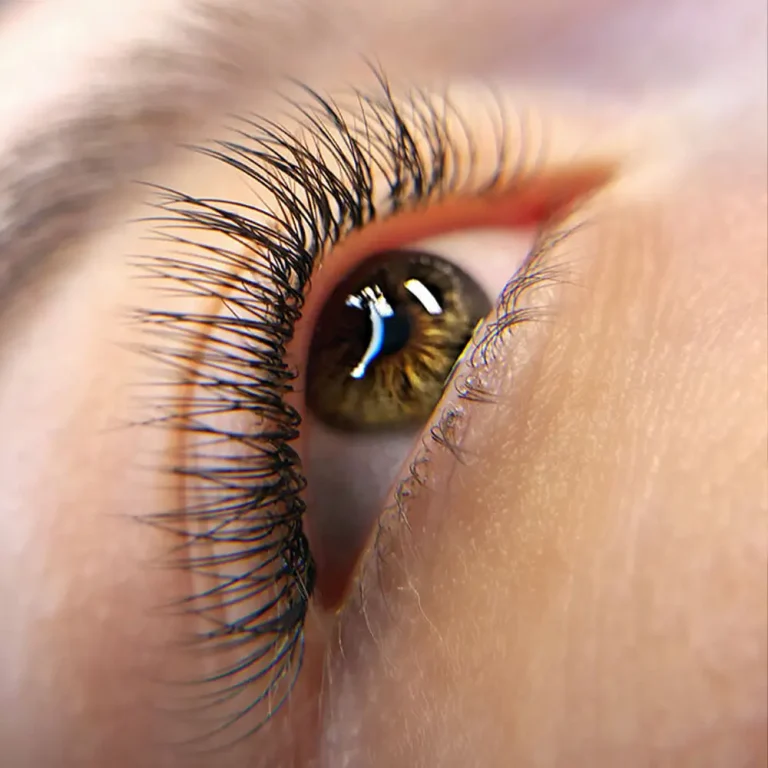
Then the set itself changes. For clients with dry eye or a history of lid inflammation I go lighter and shorter than I otherwise would. Fine diameter fans in the 0.03 to 0.05 range rather than heavier classic lashes. Length usually capped a few millimeters shorter than what the eye shape could technically carry. Wider spacing between fans, which leaves room for a cleansing brush to actually reach the lash line. No bottom lash extensions. And I lean toward a classic or light hybrid over mega volume, because density is the enemy of cleaning access.
Cleaning routine goes from a nice-to-have to non-negotiable. Foam cleanser twice a day, with a brush, along the lid margin, not just a rinse. If you’re not going to do that, be honest with me during the consult and we’ll talk about whether a lash lift makes more sense for you, since it leaves the lash line completely accessible. I’ve written more about why lash hygiene matters so much in this piece on cleaning your lashes.
Fill intervals often need to be a little tighter too, around two and a half weeks instead of three, because inflammation speeds up the natural shed cycle.
Signs to stop and call your doctor
Once you have a set on, watch for redness that lasts more than a day after your appointment, swelling of the lid itself rather than just the lash line, discharge, pain, or any change in your vision. Any of those means see an eye doctor, not wait it out.
Mild tenderness on the evening of a long appointment is normal and usually gone by morning. Persistent grittiness that’s new since your set is worth a call.
The consultation is where this gets sorted
I’d rather spend fifteen extra minutes at the start than have you sitting at home three days later wondering whether what you’re feeling is normal. If you have any eye condition at all, tell me before we start, including things you think are minor. Contact lens issues, rosacea, recent eye surgery, a new medication that dried you out. All of it changes what I do.
That’s a lot of what a lash consultation is actually for. It’s not just picking a style off a photo.
Common questions
Can I get lash extensions if I’ve been diagnosed with blepharitis? Often yes, if it’s under control and your eye doctor is comfortable with it. Not during a flare. The set will be lighter and more widely spaced than a standard set, and your daily cleaning is what keeps it working.
Will extensions make my dry eye worse? They can, particularly long and dense sets, and particularly if they change how completely you blink. Shorter, lighter sets are much less likely to. If your dry eye is significant, talk to your eye doctor before booking.
I have a stye right now. Can you just work around it? No. Come back once it’s fully resolved and you’ve had it looked at.
Do extensions cause blepharitis? They don’t cause it directly, but poor lash hygiene with extensions on creates conditions where it develops more easily. Adhesive allergy can also produce an allergic form of it. Both are largely avoidable with good technique and honest aftercare. I go into the broader damage question in this post.
My last salon never asked about any of this. That’s common and it’s part of why I wrote this. Ask any studio what they do differently for clients with lid conditions. If they don’t have an answer, that tells you something.
Come talk to us
We’re at 1202P 75th St in Downers Grove, IL 60516, and we see clients from Woodridge, Westmont, Lisle, Naperville, Oak Brook, Hinsdale, La Grange, and Clarendon Hills. If you have an eye condition and you’ve been told no somewhere else, or you’ve just been nervous about asking, call us at (630) 822-0201 and we’ll talk it through before you book anything.
You can read more about our approach to eyelash extensions in Downers Grove, browse the full lash extensions FAQ, meet our team, or get in touch.
This article is general information from a licensed lash professional and is not medical advice. It cannot replace an examination by an optometrist or ophthalmologist. If you have symptoms affecting your eyes, see an eye doctor.
Michelle Lashes-Brows-Beauty
Ready to book your appointment?
Have a question about a service, or ready to book? We'd love to see you at our Downers Grove studio.
1202P 75th St, Downers Grove, IL 60516